
Fraser Valley Housing Market Statistics July 2023

Andy Schildhorn • August 4, 2023

Seasonality, interest rates temper sales in the Fraser Valley.


SURREY, BC — After five months of successive increases, real estate sales in the Fraser Valley dropped in response to a combination of continued rising interest rates and the summer sales cycle.


The Fraser Valley Real Estate Board processed 1,368 sales in July on its Multiple Listing Service® (MLS®), a decrease of 29.3 per cent below June, but still 37.8 per cent above July 2022.
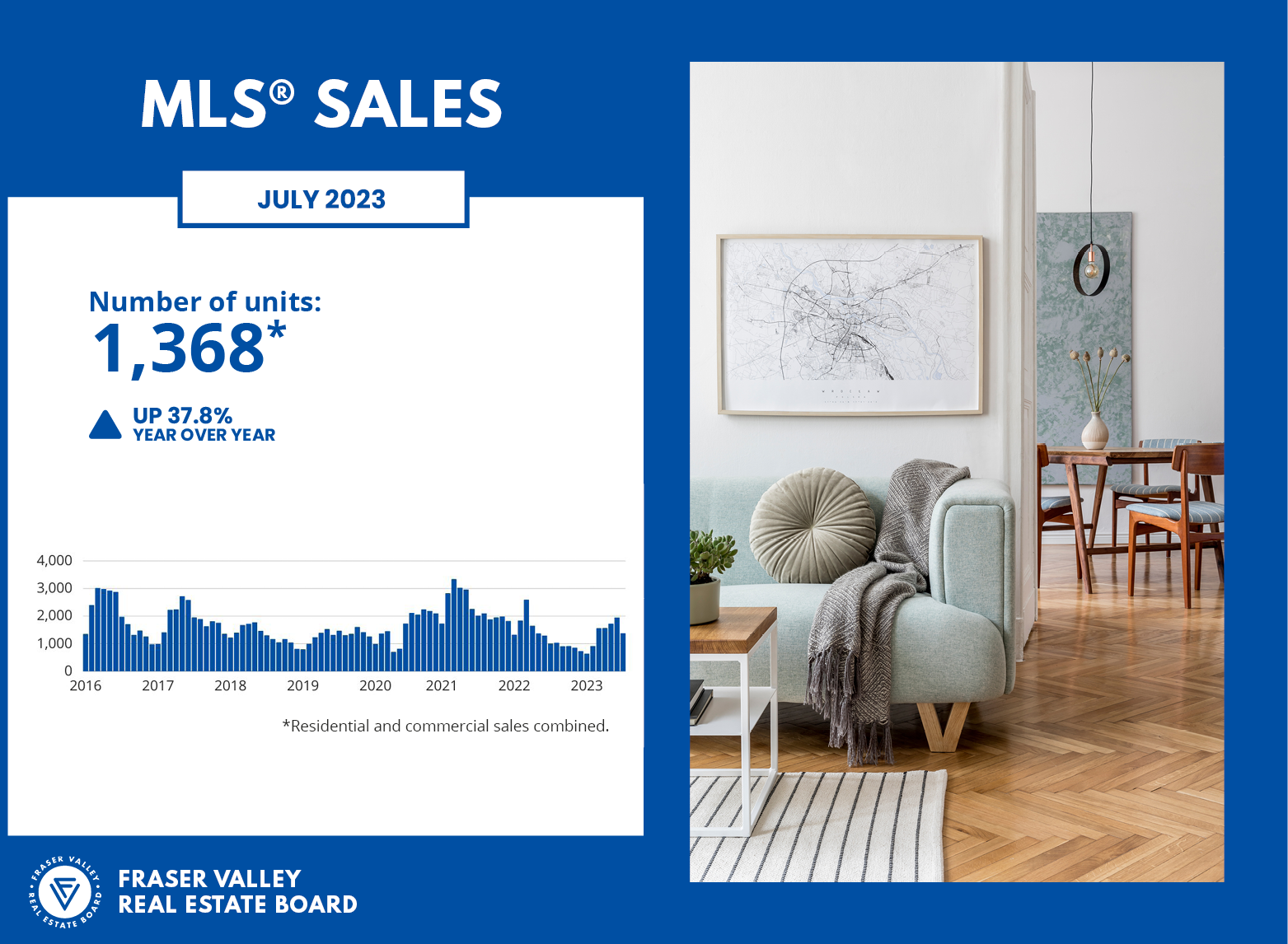

July new listings, at 2,855, were also down by 16.6 per cent compared to last month but 19.7 per cent higher than July 2022 levels, and virtually on par with the ten-year average. Active listings continued to climb, increasing by 4.3 per cent over June, bringing the total inventory available for sale in the region to 6,199.

“Summer is typically a slower period for the real estate sector and the higher interest rates are contributing to the market slowdown,” said Narinder Bains, Chair of the Fraser Valley Real Estate Board. “We’re seeing less traffic and fewer multiple offers as buyers and sellers put a pause on decisions and we expect this trend to continue until the fall cycle.”

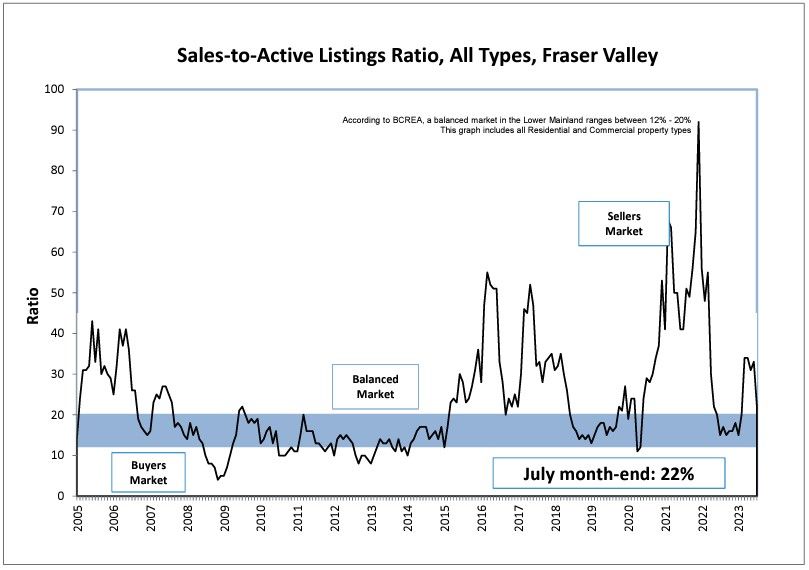
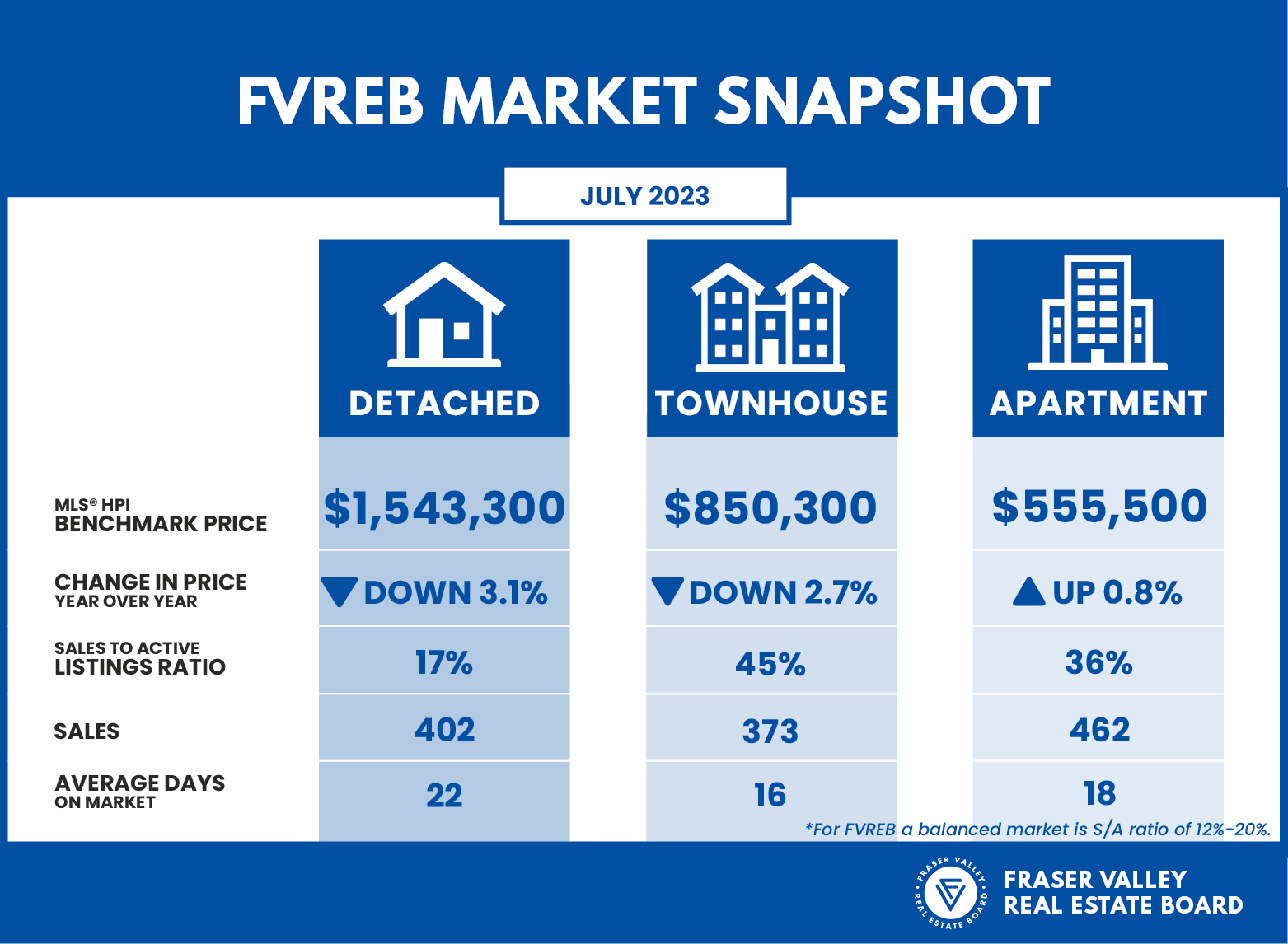
The market for detached homes softened in July with a sales-to-active listings ratio of 17 per cent while demand for townhomes and apartments remained firm at 45 per cent and 36 per cent respectively.


The market is considered balanced when the sales-to-active-listing ratio is between 12 per cent and 20 per cent.


Prices across all categories saw negligible increases compared to last month.


“With rates at their highest levels in over 20 years and inflation still elevated, buyers and sellers are taking time to reevaluate their objectives,” said FVREB CEO Baldev Gill. “As housing options begin to take center stage on the Provincial agenda, consumers will want to consult a professional REALTOR® for a detailed picture of the market in their communities and to stay up to date on upcoming changes that may impact their decisions.”
On average, properties spent two to three weeks on the market before selling, with detached homes spending 22 days on the market, and townhomes and apartments moving slightly more quickly at 16 and 18 days, respectively.


MLS® HPI Benchmark Price Activity

  • Single Family Detached: At $1,543,300 the Benchmark price for an FVREB single-family detached home increased 1.1 per cent compared to June 2023 and decreased 3.1 per cent compared to July 2022.
  • Townhomes: At $850,300, the Benchmark price for an FVREB townhome increased 0.6 per cent compared to June 2023 and decreased 2.7 per cent compared to July 2022.
  • Apartments: At $555,500, the Benchmark price for an FVREB apartment/condo increased 0.6 per cent compared to June 2023 and increased 0.8 per cent compared to July 2022.


By Emily Edwards | Fraser Valley Current December 24, 2025
Holiday magic is happening all across the Fraser Valley this season. From tree lighting ceremonies and festive markets to concerts, parades, and family-friendly celebrations, there's no shortage of ways to embrace the spirit of the season. 👉 Guide Here
By Bank of Canada December 23, 2025
The Bank of Canada today held its target for the overnight rate at 2.25%, with the Bank Rate at 2.5% and the deposit rate at 2.20%. Major economies around the world continue to show resilience to US trade protectionism, but uncertainty is still high. In the United States, economic growth is being supported by strong consumption and a surge in AI investment. The US government shutdown caused volatility in quarterly growth and delayed the release of some key economic data. Tariffs are causing some upward pressure on US inflation. In the euro area, economic growth has been stronger than expected, with the services sector showing particular resilience. In China, soft domestic demand, including more weakness in the housing market, is weighing on growth. Global financial conditions, oil prices, and the Canadian dollar are all roughly unchanged since the Bank’s October Monetary Policy Report (MPR). 👉 Read the Article Here 
By Zak Khan | REW December 22, 2025
Every January in BC, BC Assessment sends its valuations to property owners. These letters form the basis of property tax values on real estate across the province. They are based on many factors, but sometimes the assessed value may come as a shock to you. If this is the case, and you feel the assessment is incorrect, you can file an appeal. Why your BC Assessment value may not be what you expect. To help equip yourself for the best chance of success during an appeal, it’s best to review some reasons why your assessed value may not be what you expected. BC Assessment bases its valuations on the following factors: The location of the property. That is, how desirable is the place it’s located? The size of the property. Is it a tiny house or a multi-room mansion? The size of the lot. Is it a small lot, or a massive multi-acre estate? View from the home. A mountain view is worth more than a line of dumpsters. The property age. Is it newly built or an outdated structure? It could also be historically valuable. Home add-ons such as carports, garages and decks. The sales’ prices from similar homes in your area. In essence, that means that surrounding properties can have an impact on your property value, in addition to your own property. For example, if all your neighbours improve their properties by renovating their homes, upgrading landscaping and similar efforts, this could increase your assessed value as a knock-on effect. In situations like this, filing an appeal to show that you didn’t undertake similar efforts could help your appeal succeed. 👉 Read the Article Here
More Posts